A Conversation with Professor Leo Romero:
The University of New Mexico School of Law and the Modern Profession
Interviewed by
Brandon McIntyre
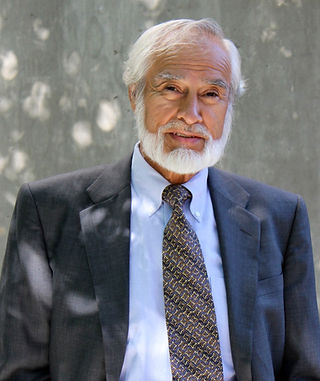
Q. This special Commemorative Edition of the Bar Bulletin focuses on legal history. What influence has legal education had on New Mexico's legal profession?
A. The greatest influence of legal education in New Mexico has been the number and quality of lawyers it has produced. In the early days, nearly every lawyer in New Mexico studied law outside the state, often in Washington, D.C. When the University of New Mexico School of Law opened in 1947, it began training lawyers locally.
Its primary impact was producing attorneys who passed the bar exam, became leaders in the profession and served their communities. The law school also created important scholarly publications, including the Natural Resources Journal and later the New Mexico Law Review. Those publications examined legislative developments and court decisions, helping lawyers stay informed about changes in New Mexico law. Legal education helped create a strong, homegrown bar and strengthened the profession throughout the state.
Q. Before the University of New Mexico School of Law was established in 1947, how did most New Mexicans enter the legal profession?
A. Before 1947, there were several paths into the legal profession. Many aspiring attorneys attended law schools outside New Mexico, particularly Georgetown University and George Washington University in Washington, D.C.
Others entered the profession by "reading the law." Instead of attending law school, they studied under a practicing attorney, worked in a law office and prepared independently for the bar exam. That approach was common before the law school was established.
Many New Mexicans who worked in congressional offices in Washington also attended law school at night. In general, people either left the state for legal education or learned the profession through apprenticeship and practical experience.
Q. Once the law school was established, what was its greatest impact on the profession?
A. Its greatest impact was localizing legal education. For the first time, New Mexicans could earn a legal education without leaving the state.
The law school produced more attorneys and helped create a bar that better reflected New Mexico's communities. Graduates became judges, elected officials, public defenders, prosecutors and leaders in private practice. Many alumni went on to serve on the New Mexico Supreme Court and in other important positions throughout the legal system.
The law school also became a center for legal scholarship and discussion. Through publications, conferences and academic programs focused on areas such as water law and Indian law, it helped advance the professionalization of legal practice in New Mexico.
Q. How did the law school expand access to the legal profession?
A. By offering a legal education within the state, the law school opened opportunities for students who otherwise may not have been able to leave home to attend law school.
The school also worked to better reflect New Mexico's diverse population. During its early decades, the student body was overwhelmingly male and white. That began to change in the late 1960s and early 1970s.
I was one of the first two Hispanic professors hired by the law school in the early 1970s, and the first female law professor joined the faculty around the same time. As the faculty became more diverse, the student body changed as well. By the mid-1970s, approximately half of the students were women, and roughly 35% to 40% came from minority backgrounds.
Those changes helped ensure that the legal profession more accurately reflected the people and communities of New Mexico.
Q. How did the law school's relationship with New Mexico's courts and the State Bar strengthen the profession?
A. The law school has long maintained strong relationships with both the courts and the State Bar of New Mexico. Faculty members have served on study committees, participated in bar initiatives and helped examine issues affecting women, minorities and other groups within the profession.
The physical proximity of the law school and the Court of Appeals also created important opportunities. When the Court of Appeals established its Albuquerque location next to the law school, judges used the law library and moot courtroom, while students gained firsthand exposure to appellate proceedings.
That close relationship allowed students, faculty, judges and practicing attorneys to learn from one another. Many judges and justices have also graduated from the law school, creating an ongoing connection between legal education and the judiciary.
Q. What lasting role has the University of New Mexico School of Law played in shaping today's legal profession?
A. The law school's most significant legacy is the generations of attorneys it has educated who continue to serve New Mexico. Its graduates work throughout the legal system as attorneys, judges, legislators, prosecutors and public servants.
The school continues to shape the profession through scholarship as well. The New Mexico Law Review remains an important resource for tracking legislative developments and court decisions, helping lawyers understand how the law continues to evolve.
In many ways, the law school serves as a conscience for the legal profession. It not only educates future lawyers but also examines, critiques and helps guide the development of New Mexico law.
About Leo M. Romero
LEO M. ROMERO is Professor Emeritus and former Dean of the University of New Mexico School of Law. He has served on the Law School faculty since 1972. While serving as dean, he chaired the Judicial Nominating Commissions for the Supreme Court, Court of Appeals, District, and Metropolitan courts in New Mexico. Because the Judicial Nominating system was new when he became dean, he wrote the Rules Governing Judicial Selection Commissions.
A member of the New Mexico Bar since 1968 (almost 58 years), Professor Romero started his legal career in Washington DC practicing in federal courts. After several years of practice, he turned to legal education. At UNM he taught Criminal Law, Criminal Procedure, and Evidence. His scholarship focused mostly on criminal law, primarily on New Mexico criminal law. His research and writings include law review articles, legal briefs in the United States and New Mexico Supreme Courts, American Bar Association reports, and legislative proposals for the New Mexico legislature. Before joining the law school faculty, he practiced criminal law in the District of Columbia as a Prettyman Fellow. In New Mexico, he represented indigent defendants in the Law School’s clinic as well as clients in white collar crime prosecutions in state and federal courts.
Professor Romero earned his undergraduate degree at Oberlin College, his J.D. at Washington University, St. Louis, and LL.M. at Georgetown University. In addition to teaching at UNM, he taught at a number of other law schools, including Stanford, University of California Hastings (now University of California San Francisco), George Washington University, and the University of Oregon.
He served as Chair of the New Mexico Supreme Court Ad Hoc Pretrial Release Committee, founding member of the New Mexico Public Defender Commission, Chair of the NITA Board of Trustees, and Chair of the Law School Admission Council (the organization that develops and administers the LSAT).