A Conversation with the
2026 State Bar of
New Mexico Board of Bar Commissioner Officers:
Stewardship, Service
and the Future of the Profession
Interviewed by
Brandon McIntyre
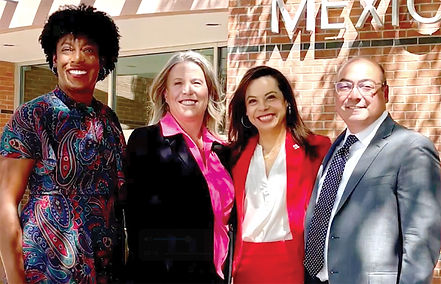
Aja N. Brooks (Immediate Past President), Lucy H. Sinkular (President-Elect), Allison H. Block-Chavez (President) and Tomas Garcia (Secretary-Treasurer)
How would you describe the legal profession in New Mexico today, and what defines it at this moment?
Allison H. Block-Chavez: The State Bar of New Mexico was founded in 1886, and we have a long tradition of lawyers knowing one another and serving their communities. That tradition remains strong today. At the same time, I believe we are at the end of one era and the beginning of another. Artificial intelligence and other emerging technologies are fundamentally changing how lawyers practice. They are reshaping legal research, drafting, client communication and the way firms operate. They are influencing legal education and prompting new conversations about how to close the access-to-justice gap. We are in the midst of a significant evolution. It is an extraordinary time to be a lawyer in New Mexico because we have an opportunity to help shape how the profession moves into the future.
Lucy H. Sinkular: I would describe this moment as a period of significant change. Traditionally, many attorneys learned the profession through mentorship structures within larger firms. While that model never fully defined New Mexico, it has become increasingly rare. As a result, we have a chance to create new connections between experienced attorneys and those entering the profession—through mentorship, relationship-building and the sharing of knowledge. One of the most rewarding aspects of mentorship is that it is never one-sided. While experienced lawyers share perspective and experience, they also learn from newer attorneys who bring fresh ideas and approaches to the profession. For me, the relationships among attorneys are at a dynamic and evolving point, and that presents tremendous opportunity for growth.
Aja N. Brooks: I believe the legal profession is facing significant challenges, not only in New Mexico but across the country. We have seen criticism and attacks directed at attorneys, law firms and members of the judiciary. As a result, this moment will test whether we truly honor the promise we made when we took our attorney’s oath and committed ourselves to defending the Constitution. Lawyers must be champions of democracy and champions of the rule of law. It is relatively easy to uphold those principles during comfortable times. The true test is whether we remain committed to them when doing so becomes difficult. I think this moment calls upon lawyers to demonstrate that commitment in word and deed.
Tomas J. Garcia: One defining characteristic of the legal profession in New Mexico stems from the structure of our state. We have population centers such as Albuquerque, Santa Fe and Las Cruces, but we also have many small and rural communities. For decades, one of our biggest challenges has been ensuring that those communities have meaningful access to legal services. Today, however, technological advancements present new opportunities to address that challenge. Attorneys can connect with clients through video conferencing, remote consultations and virtual court appearances. Our courts have become more flexible in allowing remote participation, making it easier to serve communities that historically lacked access to legal representation. The challenge moving forward is to ensure we continue meeting clients where they are and providing legal services statewide. That is an issue the profession and the State Bar must keep addressing.
What are the most important responsibilities for sustaining and strengthening the profession?
Allison H. Block-Chavez: I think of this in three parts. First is our responsibility to our members – providing support, continuing legal education and professional development. Second is our responsibility to the public – ensuring access to justice, upholding the rule of law, and serving our communities. Third is our responsibility to the judiciary – supporting fair and efficient administration of justice. The State Bar’s mission has always been about building connections among lawyers and between lawyers and the community. Part of what the Bar offers is a network and a sense of community for attorneys. We connect lawyers with each other and with resources, through mentorship programs, committee work and outreach. What truly sustains and strengthens our profession is our commitment to service – lawyers serving lawyers and lawyers serving the public. When each lawyer looks beyond themselves and contributes to the broader community, the whole profession is stronger.
Your theme as State Bar President was “Together Toward Justice.” How do you see that message carrying forward into today’s challenges?
Aja N. Brooks: The theme “Together Toward Justice” is one that will always be true. It emphasizes that pursuing justice is an ongoing effort we make as a community of lawyers, judges, and citizens. No single lawyer or generation completes the work; we all move forward together. By working “together toward justice,” we are underscoring the importance of collaboration—across different backgrounds, experiences and roles. This theme will ring true into perpetuity. In today’s challenges, it reminds us to unite in our efforts: to support one another, to listen across divides, and to build bridges. Focusing on togetherness means encouraging dialogue between the bench and bar, mentoring the next generation, and ensuring everyone has a seat at the table. That collective focus on justice is how we keep moving forward, no matter the obstacles.
Where do you see the greatest opportunity for growth in the profession?
Lucy H. Sinkular: I see opportunities to modernize and strengthen the profession in several ways. First, we can leverage technology to improve access and efficiency. For example, continuing to advance remote court appearances and online resources can help lawyers and clients across the state. Second, we have a chance to connect with the next generation of lawyers. Creating mentorship and networking opportunities for young attorneys is crucial. I want to focus on relationship-building between experienced practitioners and newcomers. Third, I plan to emphasize well-being and inclusion. We know lawyers’ mental health and work-life balance are important issues; providing support in these areas is a priority. Altogether, by embracing new tools and strengthening connections among lawyers, we can move the profession forward while upholding our core values.
How can the profession stay grounded in its core principles while continuing to evolve?
Tomas J. Garcia: The key is to remember our core values—integrity, ethics, and service—no matter how practices change. We stay grounded by continuously reflecting on the oath we took as attorneys. Those fundamentals don’t change over time. When we introduce innovations (for instance, new legal technologies or business models), we should use them to enhance justice and service, not as ends in themselves. For example, if a law firm adopts new software, it should be to make lawyers more efficient so they have time to take on pro bono cases or mentor others. By always asking, “How does this serve our clients and community?”, we ensure our actions align with our principles. In essence, we evolve strategically: adopting new methods or tools only to the extent they further our mission of fair representation and upholding the law.
How can attorneys strengthen and improve their practice as the profession evolves?
Allison H. Block-Chavez: Lawyers are going to use technology whether we like it or not, so our job is to make sure it’s used competently and ethically. But judgment cannot be automated, and advocacy cannot be automated. The lawyer-client relationship—helping people through one of the hardest parts of their lives—that remains ours.
Lucy H. Sinkular: Right now, our profession is strengthening itself through innovation and community. Many lawyers are adopting new tools and best practices to serve clients better. We’re also seeing more attention to well-being and collegial support. For example, bar committees and local groups are focusing on mental health resources, and colleagues are checking in on each other more. Additionally, by reaching out across specialties and encouraging younger attorneys, we build a more resilient community. All of these efforts – using technology wisely, sharing knowledge, and caring for one another – help us improve together.
Aja Brooks: The legal profession at its heart is a helping profession. We strengthen it by fostering a culture of service and empathy. That means encouraging pro bono work, community outreach and generosity among lawyers. Empathy is a powerful tool: when lawyers really listen to their clients and to each other, we build trust and understanding. Senior lawyers can mentor others with patience, and everyone can approach challenges with a willingness to learn. By being generous with our time and knowledge, and by treating clients and colleagues with compassion, we reinforce the supportive culture that makes our profession strong.
Tomas J. Garcia: I agree that empathy is key. As the profession evolves, leading with empathy means listening—to our clients, who have new needs, and to one another across generations. The challenges we face, like technological change, require collaboration. Strengthening the profession means building collegial relationships: teaming up on cases, sharing advice, and supporting each other’s success. By showing respect and kindness in our interactions, and by mentoring young lawyers to do the same, we elevate the entire bar. In short, the more we work together and look out for each other, the stronger our profession will be.
You’ve shared that the Rule of Law is one of your core values. How do you see lawyers helping to sustain and strengthen the Rule of Law now?
Allison H. Block-Chavez: Thank you. The Rule of Law is indeed at the heart of our oath and our practice. Lawyers help sustain it every day by ensuring that everyone has a voice in the legal system. That means representing clients vigorously, especially those who might otherwise go unheard, and standing up when someone’s rights are threatened. It also means respecting the process: we must be honest and fair advocates, and we must encourage others to resolve disputes through the law. When attorneys speak out against injustice and defend the Constitution, we reinforce that the law applies equally to all. By keeping our own conduct ethical and educating the public about their rights, lawyers strengthen trust in the legal system. In short, every time we do our jobs honorably, we uphold the Rule of Law.
Looking ahead, what gives you confidence in the future of the profession?
Allison H. Block-Chavez: Honestly, I see a lot of reason for optimism. The new generation of attorneys coming in are passionate and innovative. They care deeply about the same values we do—justice, ethics and service—but they also bring fresh ideas and energy. I’ve met younger lawyers who are leveraging technology for legal aid, who mentor peers on social media, and who volunteer tirelessly. When I see so many people committed to collaboration and to tackling challenges (whether it’s rural legal access or courtroom tech), I am hopeful. The passion, talent and dedication in the profession give me confidence that we will continue to thrive.
Lucy H. Sinkular: I have a lot of confidence because I see people who truly care about the right things. Young lawyers entering the field are eager to learn and bring new perspectives, and experienced lawyers are stepping up to mentor and support them. I’m inspired by colleagues starting initiatives on diversity, wellness and professional growth. When I see new members leading committees with enthusiasm, volunteering for pro bono and reaching out to the community, it shows me the profession is in good hands. That ongoing commitment to our core ideals – fairness, service, professionalism – gives me great confidence in our future.
Aja N. Brooks: Last night I attended an event with law students and new attorneys, and I felt energized. Those young people were talking about how to combine technology and compassion, how to cross political divides for the sake of justice. Hearing their ideas and hope reminded me that the next generation understands our responsibilities and is eager to meet them. That kind of engagement – seeing new lawyers determined to work together and learn from one another – gives me confidence. It tells me our profession will adapt and continue forward, united by shared purpose.
Tomas J. Garcia: I believe in the future because I see resilience and dedication in our colleagues. We face many changes, but our collective commitment to justice never wavers. I’m encouraged by how lawyers and judges are building partnerships, by attorneys constantly pursuing continuing education, and by lawyers across New Mexico stepping up to lead bar committees and community programs. When I think about it, what gives me the most confidence is the fact that we in the bar treat our work as a calling, not just a job. That dedication to learning and to serving others – whether through mentorship, innovation or simply doing right by our clients – means the profession will continue to move forward strongly.